
In cities like Bengaluru, space is becoming increasingly precious. We measure it in square feet, negotiate it in layouts, and optimise it in floor plans. Yet the most valuable square footage is often not inside your apartment. It is the green space surrounding it.
A garden does something subtle but transformative. It changes how you wake up, shifts how you unwind, quietly improves your physical and mental health, your social life, and even the long-term value of your home. And in a fast-growing urban environment, that shift is no longer optional.
Let’s take a closer look at why.
Green Spaces and Mental Health
There is substantial research linking access to greenery with improved mental health outcomes. Studies in urban design and public health consistently show that people who live near landscaped environments report lower stress levels, better mood regulation, and improved cognitive focus compared to residents in densely built, low-greenery areas.
The World Health Organization recommends that urban residents should have access to at least 9 square metres of green space per person within walking distance. In cities getting denser faster, that benchmark is getting increasingly difficult to meet.
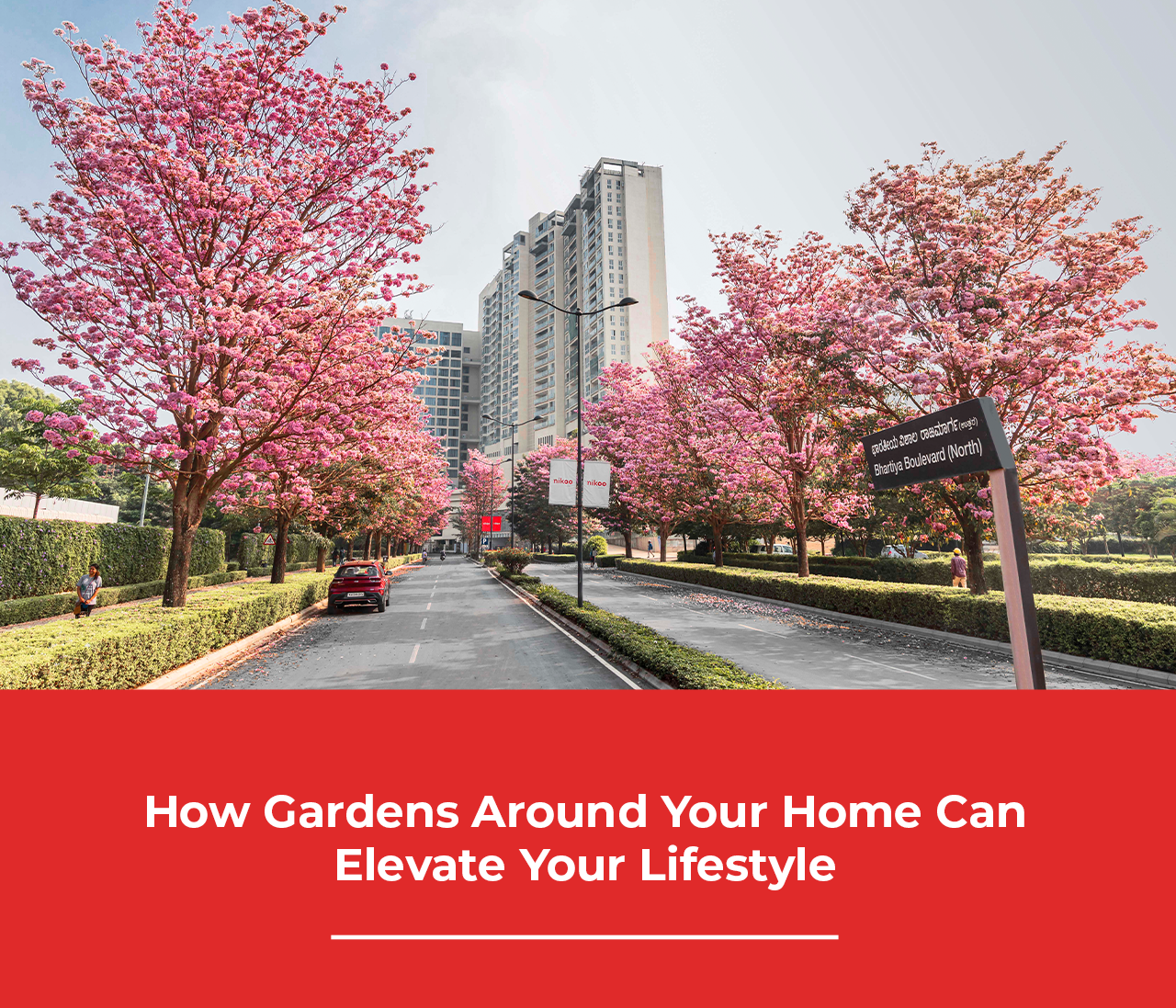
This is where thoughtfully planned residential communities can make a meaningful difference. Landscaped courtyards, shaded pathways, and tree-lined internal streets can help provide daily exposure to nature without requiring residents to leave their neighbourhood. Thus making a short evening walk restorative rather than routine. Making a quiet morning with coffee calmer. And over time, those small experiences can compound into measurable improvements in overall well-being.
Physical Health Benefits You Can Measure
The impact of gardens extends beyond emotional comfort. Physical health benefits are also increasingly documented with increasing greenery around you. Residents living near green spaces are statistically more likely to engage in regular walking and light physical activity, both of which reduce long-term cardiovascular risk.
Moreover, trees and vegetation help filter particulate matter and reduce airborne pollutants, helping improve the air quality. In high-traffic urban zones, especially in Indian metro cities where AQI is becoming a growing issue, this buffering effect becomes particularly valuable.
Further, with regard to temperature regulation, landscaped residential zones can be 2 to 4 degrees Celsius cooler than surrounding concrete-dominant areas due to reduced heat absorption. This mitigation of the urban heat island effect improves outdoor comfort and can even reduce indoor cooling requirements. Lower ambient temperatures translate to more usable outdoor hours, and that changes how a neighbourhood functions throughout the day.
Social Energy Grows Where Greenery Exists
Design shapes behaviour more than we often realise. In communities with well-planned gardens and open lawns, residents naturally spend more time outdoors. Children find safe spaces to play. Elderly residents establish walking routines. Working professionals decompress after long days without needing to drive elsewhere.
Shared green spaces become informal gathering points allowing conversations to happen more organically and neighbourhood relationships to form without effort.
That sense of community is not accidental, it is a byproduct of spatial design. When open areas are inviting rather than decorative, they encourage interaction. And, in an age where urban isolation is increasing, this becomes a quiet but powerful advantage.
Property Value and Market Demand
Lifestyle advantages inevitably translate into financial value. Real estate research globally indicates that properties adjacent to well-maintained green spaces can command 5 to 15 percent higher resale value compared to similar properties without access to landscaped environments.
In Bengaluru’s competitive housing market, this effect is visible in absorption trends. Projects that incorporate central gardens, pedestrian-friendly planning, and open-to-sky amenities often see faster sales cycles and stronger rental occupancy. Buyers respond to openness and tenants respond to quality of life.
When comparing two similar apartments, the one surrounded by greenery tends to feel more future-ready. It offers visual relief and signals thoughtful planning. In the resale market, perception plays a critical role.
Urban Density Makes Gardens Even More Important
Bengaluru recorded more than 60,000 residential unit sales in 2025, with strong new launches across key corridors. As supply increases and density rises, green planning shifts from being a luxury feature to a differentiator.
Integrated townships and well-designed communities stand apart precisely because they prioritise breathing space. The moment you enter such a development, the difference is perceptible. Air circulates more freely. Natural light penetrates deeper. The environment feels intentional rather than compressed.
Gardens as Everyday Luxury
Luxury is evolving. It is no longer defined solely by imported finishes or premium fittings. Today, luxury increasingly means access to space, air, light, and calm.
Homes within developments like Nikoo Homes are designed with landscaped courtyards and pedestrian pathways integrated into the master plan rather than appended later. When placed within a larger ecosystem such as Bhartiya City, these green spaces connect seamlessly with retail, workspaces, and community zones.
Long-Term Emotional Return on Investment
There is something quietly powerful about beginning your day with greenery in sight. It slows your pace. It anchors your attention. It softens the intensity of urban living.
Over years, those daily moments build emotional equity. They influence how satisfied you feel in your home. And when it is time to rent or sell, that emotional appeal resonates with the next resident as well.
As cities grow vertically and horizontally, buyers are becoming more intentional about their choices. They are evaluating not just carpet area but quality of life. They are asking how a home will support their health, relationships, and long-term comfort.
Homes surrounded by thoughtfully designed green spaces offer measurable benefits, stronger community bonds, and sustained asset performance. In a city that rarely slows down, that balance becomes increasingly valuable.